Brain-training efforts designed to improve working memory can also boost scores in general problem-solving ability and improve fluid intelligence, according to new research.
Many psychologists believe general intelligence can be separated into "fluid" and "crystalline" components.
Fluid intelligence --- considered one of the most important factors in learning --- applies to all problems while crystallized intelligence consists of skills useful for specific tasks.
Courtesy Science Daily
Thursday, 21 April 2011
Monday, 18 April 2011
The Hare with the Amber Eyes
Radio 4's Book of the Week: 18th April 2011
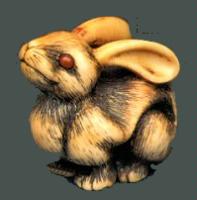
264 delicate wood and ivory carvings, none of them larger than a matchbox - that stand as a symbol of the extraordinary events that overtake one family.
Potter Edmund de Waal was entranced when he first encountered this collection in the Tokyo apartment of his great uncle Iggie. Later, when Edmund inherited the 'netsuke', they unlocked a story far larger than he could ever have imagined.
264 delicate wood and ivory carvings, none of them larger than a matchbox - that stand as a symbol of the extraordinary events that overtake one family.
Potter Edmund de Waal was entranced when he first encountered this collection in the Tokyo apartment of his great uncle Iggie. Later, when Edmund inherited the 'netsuke', they unlocked a story far larger than he could ever have imagined.
Hare Netsuke - the Hare is the fourth animal of the zodiac representing the hours between 5 a.m. and 7 p.m. and is synonymous with the moon.
Sunday, 17 April 2011
An Interview with Marie de Hennezel Psychologist and Author.
Marie is the author of 'The Warmth of the Heart prevents your Body from Rusting- Ageing without Growing Old'.
She is a respected psychologist and psychotherapist and advisor to the Ministry of Health in France.
Marie has spent much of her career working with those at the end of their lives. Marie admits to having her own difficulties in coming to terms with the ageing process, have succumbed to depression at the age of 60.
However, drawing on her own experience and encounters with some remarkable individuals , she now believes that that our later years could be the best of our lives.
Read full interview here
Courtesy Fab After Fifty
She is a respected psychologist and psychotherapist and advisor to the Ministry of Health in France.
Marie has spent much of her career working with those at the end of their lives. Marie admits to having her own difficulties in coming to terms with the ageing process, have succumbed to depression at the age of 60.
However, drawing on her own experience and encounters with some remarkable individuals , she now believes that that our later years could be the best of our lives.
Read full interview here
Courtesy Fab After Fifty
Friday, 15 April 2011
Tricks to Stimulate the Brain
Courtesy The Franklin Institute
When we are young the world seems filled with curious wonders, delightful discoveries, and daunting challenges. Our brains are taking in countless bits of information and we are developing lifetime skills. This burst of learning is like the brain Olympics of our human journey. Yet unlike the Olympic athletes who have a limited time to demonstrate their peak performance, the human brain can continue to grow and improve with exercise.
It is important to challenge your brain to learn new and novel tasks, especially processes that you've never done before. Examples include square-dancing, chess, tai chi, yoga, or sculpture. Working with modelling clay or play dough is an especially good way to grow new connections. It helps develop agility and hand-brain coordination, (like controlling the computer mouse with your opposite hand).
Neurobics™ is a unique system of brain exercises using your five physical senses and your emotional sense in unexpected ways that encourage you to shake up your everyday routines. They are designed to help your brain manufacture its own nutrients that strengthen, preserve, and grow brain cells.
Neurobics can be done anywhere, anytime, in offbeat, fun and easy ways. Nevertheless, these exercises can activate underused nerve pathways and connections, helping you achieve a fit and flexible mind.
Try to include one or more of your senses in an everyday tasks.
Get dressed with your eyes closed. Wash your hair with your eyes closed. Share a meal and use only visual cues to communicate. No talking.
Combine two senses.
Listen to music and smell flowers. Listen to the rain and tap your fingers. Watch clouds and play with modelling clay at the same time.
Break routines:
Go to work on a new route. Eat with your opposite hand. Shop at different supermarket.
When we are young the world seems filled with curious wonders, delightful discoveries, and daunting challenges. Our brains are taking in countless bits of information and we are developing lifetime skills. This burst of learning is like the brain Olympics of our human journey. Yet unlike the Olympic athletes who have a limited time to demonstrate their peak performance, the human brain can continue to grow and improve with exercise.
It is important to challenge your brain to learn new and novel tasks, especially processes that you've never done before. Examples include square-dancing, chess, tai chi, yoga, or sculpture. Working with modelling clay or play dough is an especially good way to grow new connections. It helps develop agility and hand-brain coordination, (like controlling the computer mouse with your opposite hand).
Neurobics™ is a unique system of brain exercises using your five physical senses and your emotional sense in unexpected ways that encourage you to shake up your everyday routines. They are designed to help your brain manufacture its own nutrients that strengthen, preserve, and grow brain cells.
Neurobics can be done anywhere, anytime, in offbeat, fun and easy ways. Nevertheless, these exercises can activate underused nerve pathways and connections, helping you achieve a fit and flexible mind.
Try to include one or more of your senses in an everyday tasks.
Get dressed with your eyes closed. Wash your hair with your eyes closed. Share a meal and use only visual cues to communicate. No talking.
Combine two senses.
Listen to music and smell flowers. Listen to the rain and tap your fingers. Watch clouds and play with modelling clay at the same time.
Break routines:
Go to work on a new route. Eat with your opposite hand. Shop at different supermarket.
Subscribe to:
Posts (Atom)